DEPTH-ORIENTED EMDR & PARTS WORK | CONNECTICUT
Therapy with Laura.
Your mind gets it.
The rest of you is waiting for permission to follow.
You have spent years gathering insight.
You can name your patterns.
You know the why behind them.
But still, in the middle of a reaction, you find yourself thinking: “I know exactly why I do this. So why is it still happening?”
Understanding why a pattern exists doesn’t always change the emotional or nervous-system response that keeps it going. Depth-oriented EMDR and parts work can help explore and process what’s underneath those reactions, so change can happen beyond intellectual insight.
This is where therapy becomes less about explaining and more about updating.
The symptoms that bring you into therapy aren't failures. They're strategies. Often we talk about these as different "parts" of you that developed instinctively to help you cope, stay safe, or stay connected.
At some point, these patterns did their job. They were intelligent adaptations.
Now they may feel exhausting.
We don’t shame them. We don’t fight them.
We look at what they were doing for you.
Then we update them.
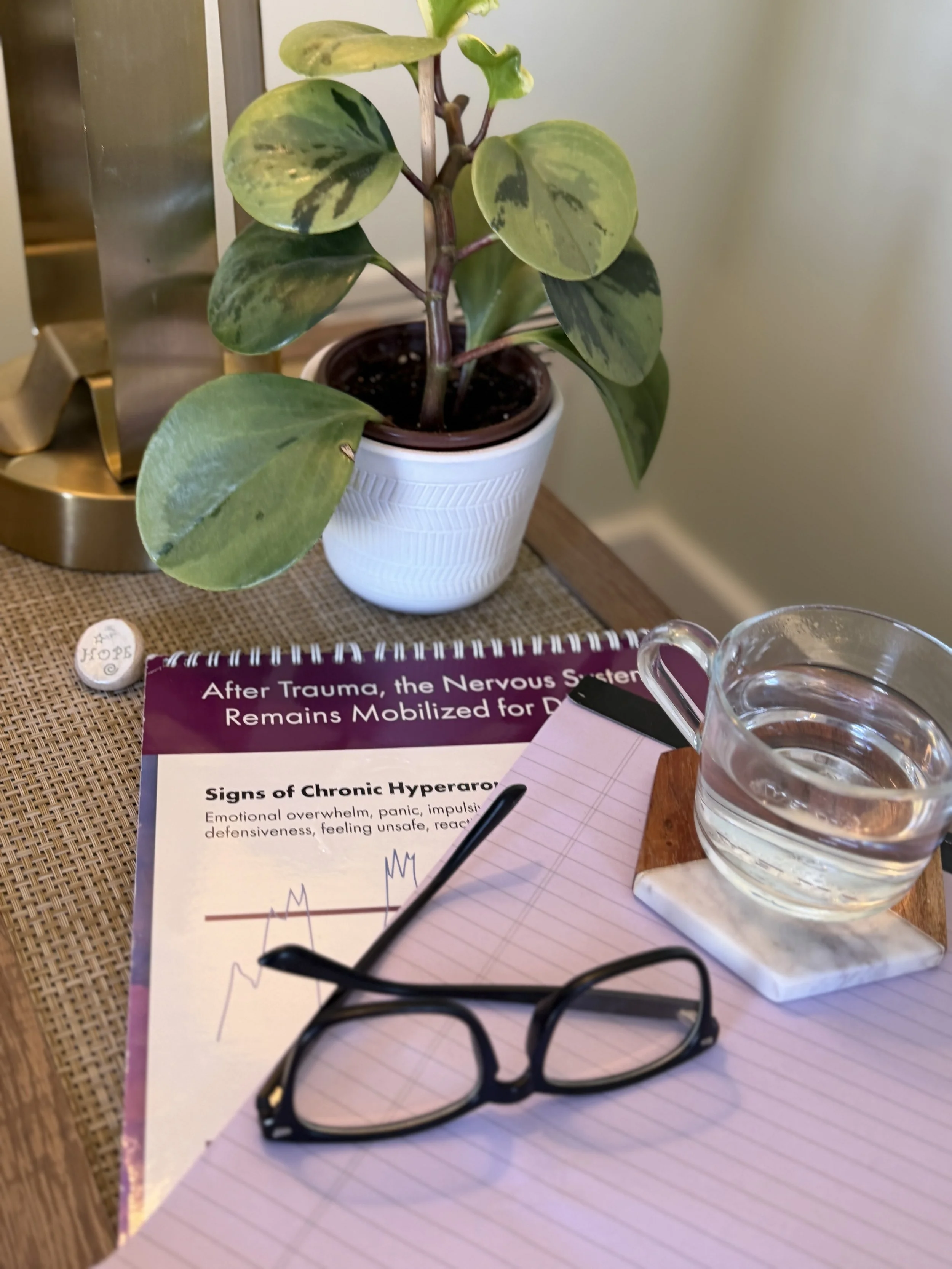
Let’s talk about the past-present connection.
Often times the things that happened long ago continue to echo long after we want them to.
Maybe it's experiences from childhood.
Maybe it's a relationship that changed you.
Maybe it's something more recent that your system hasn't fully digested yet.
We'll help your nervous system release what still feels raw.
The result?
You start responding to the life you're actually living, not the one that shaped you.
How this therapy is different.
We will absolutely talk about what’s happening in your life right now.
We’ll slow it down.
We’ll make sense of it.
We just won’t stop at understanding.
Insight matters. Problem-solving matters. They create a foundation.
But we also need to work on the level where the reactions live.
This is the level where EMDR works. Not by revisiting the past in great detail, but by helping your nervous system process what it's still carrying.
You can read more about how EMDR works on the anxiety and burnout and trauma pages.


What change feels like.
Sometimes it’s one big moment, but often times it’s quieter than that. A cascade of small things that tell you something is actually moving.
You start talking to yourself differently.
You stop and notice when the old voice shows up.
That pause is where everything changes.
You start speaking up. Not from defensiveness or years of swallowed resentment finally boiling over, but from a place of quiet clarity.
You say no.
You negotiate differently.
You stop working so hard to manage other people's feelings and reactions.
You start letting people actually see you.
The tight chest shows up less.
The labored breathing softens.
You sit differently.
There's more ease in the room and more laughter than there used to be.
Energy that was going toward managing, monitoring, and bracing starts going toward what actually matters to you. And you feel less apologetic about that.
Life doesn't become rainbows and puppies.
Hard things still happen.
But they stop sending you into a full speed tailspin.
And if the tailspin starts, you can pause.
You can redirect.
You find your way back to yourself faster than you used to.
That's how you know it's working.
Not always one breakthrough.
Just a quieter, steadier version of you, starting to feel more like yourself again.

This approach to therapy may be for you if:
You understand your patterns but still feel stuck in them
You've done helpful work in therapy before and feel ready to go further
There's a stuck feeling you can't quite explain, but you know it's holding you back
You keep second-guessing yourself or replaying old decisions on a loop
You're exhausted from holding it together while still feeling unsettled inside
FAQs:
-
I offer in-person therapy in New Britain, Connecticut, as well as telehealth for clients throughout Connecticut.
-
Nope! EMDR is not only for people who identify with having trauma or a difficult childhood. While EMDR was originally developed to treat PTSD, it works by supporting how the nervous system processes experiences, not by labeling events as traumatic.
Many people who had generally supportive upbringings still feel stuck, anxious, or overwhelmed in certain areas of life. Stress, pressure, relationship patterns, or experiences that felt manageable at the time can still shape how your nervous system learned to respond. Part of my role is to help uncover those patterns and gently support your system in responding with more ease, even when there is no single event you would call “trauma.”
-
You won’t be left alone in the middle of big emotions. EMDR is designed to be deeply supportive, with plenty of preparation and grounding work. You are always in control, and we go at a pace that feels safe for you.
-
I welcome collaboration with fellow practitioners ! If you have a client who might benefit from doing adjunctive EMDR work, I'm happy to discuss whether my approach would be a good fit. You can reach out directly through my contact page.
I offer consultation calls with referring practitioners to discuss treatment approaches and coordinate care when helpful.